Research Questions
Can a social-franchising model improve childcare quality and market functioning in settings with limited regulation? We test whether helping daycare providers improve quality also increases their revenues and enrollment, and we examine downstream effects on household labor force participation and children's development.
Primary Hypotheses
- HA1 The social franchising model will improve daycare quality, as measured by hygiene & safety, toys & manipulatives, and child experience indices.
- HA2 The social franchising model will increase provider revenue.
- HA3 The social franchising model will increase the number of child-days served.
Secondary Hypotheses
- HB1 Spillover effects onto competing providers, measured by market entry, exit, and total children in care.
- HB2 The social franchising model will increase provider profits.
- HB3 The social franchising model will increase provider agency and pride in the profession.
- HB4 The social franchising model will increase household usage of childcare (extensive and intensive margins).
- HB5 The social franchising model will increase maternal employment and household earnings.
Research Design
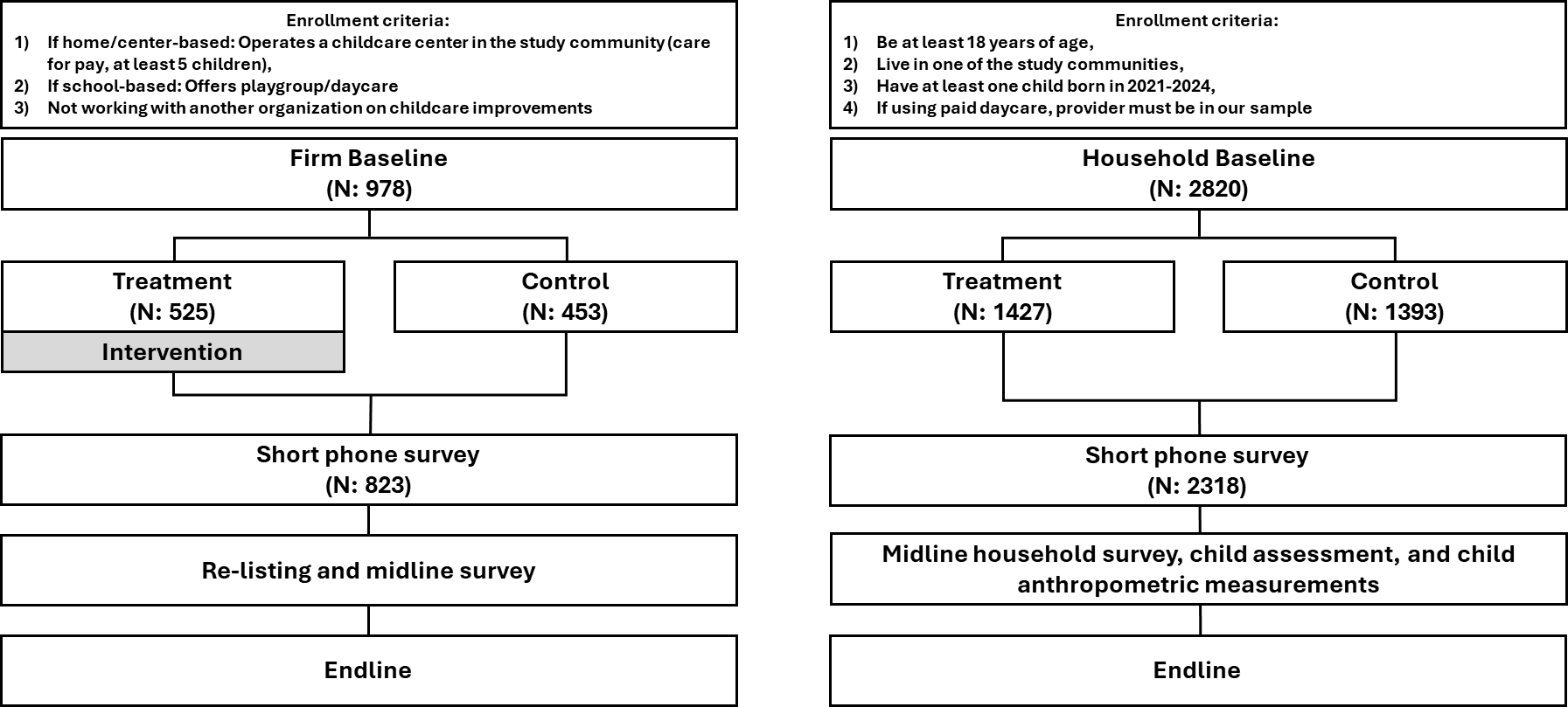
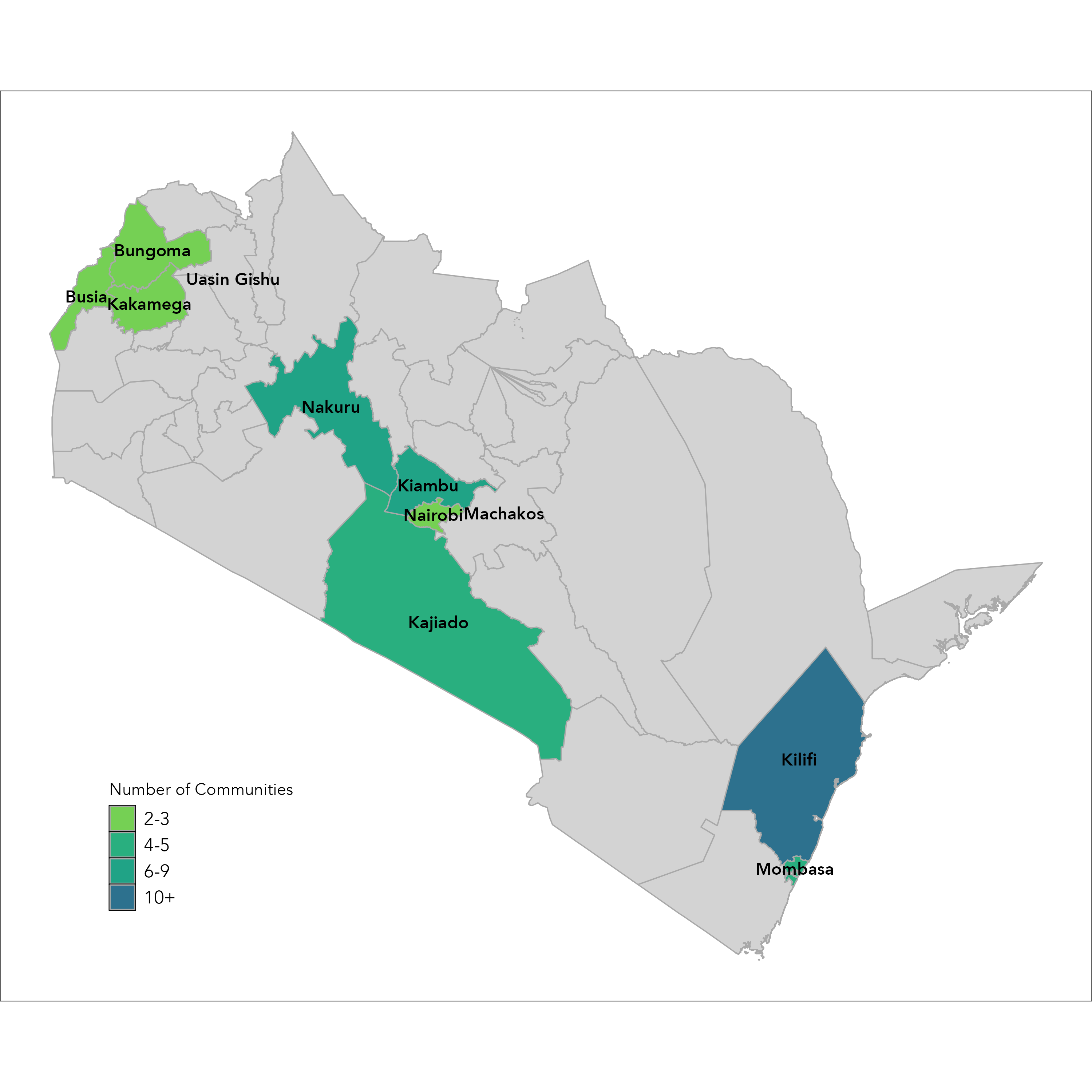
Cluster randomized controlled trial. We randomize the entry of our partner organization into 51 communities across 11 counties and assess impacts on both the supply and demand for daycare.
| Parameter | Detail |
|---|---|
| Design | Cluster RCT (community-level randomization) |
| Firm census | 978 daycare providers across 51 communities in 11 counties |
| Household sample | 2,820 households with children ages 0–4 |
| Treatment | 525 firms in treatment communities; 453 in control |
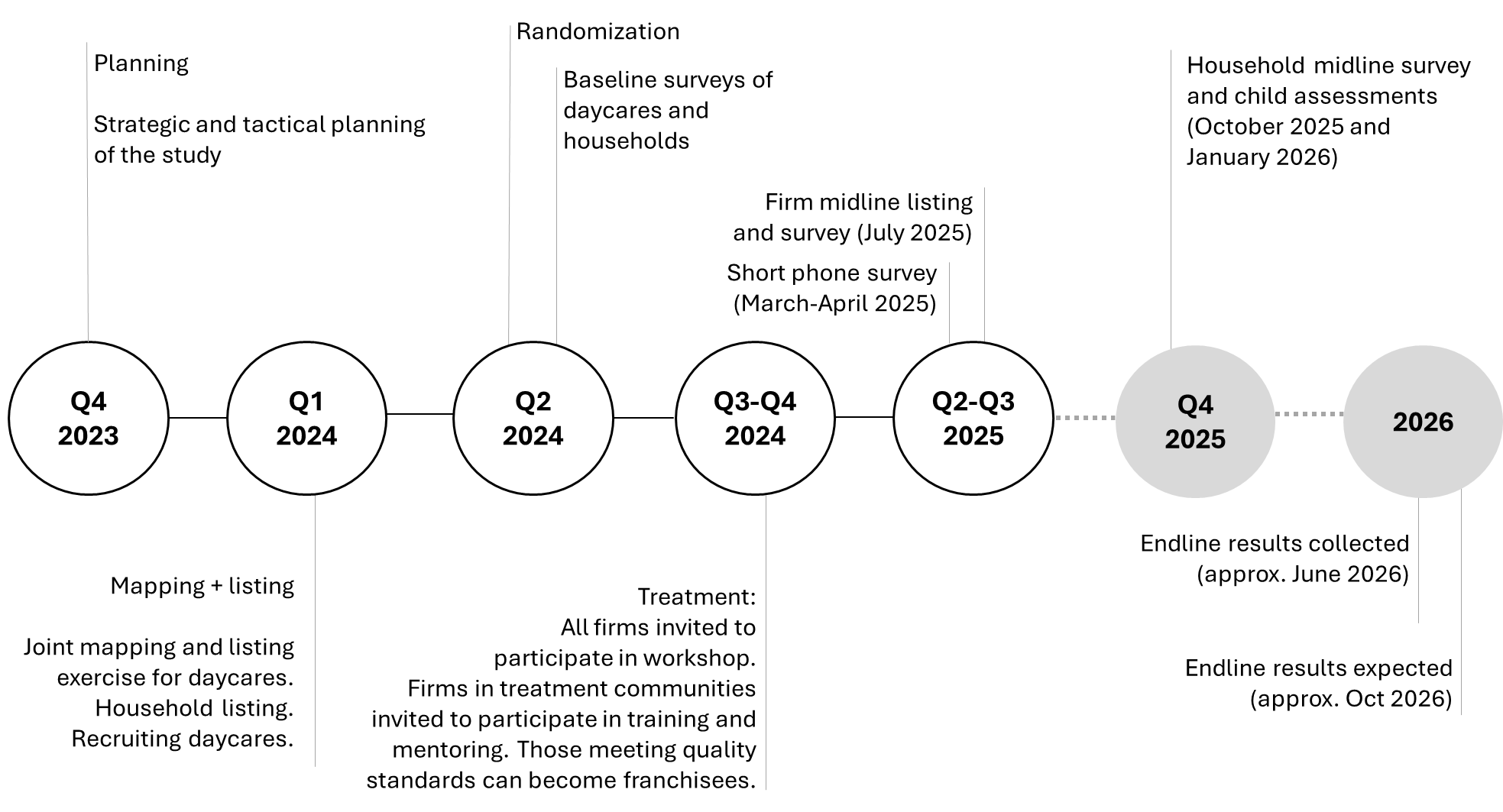
| Data collection | Baseline (2024), phone survey, midline (2025), endline (2026) |
| Pre-registration | AEARCTR-0011747 |
Key Findings
Midline results (~12 months post-intervention). Endline data collection is ongoing.
Quality improved
Franchised providers showed meaningful improvements in hygiene, safety, and the quality of children's experience.
Fewer firm closures
Treatment communities saw substantially fewer daycare closures, supporting provider sustainability.
Null at midline
No change in prices or revenues
Despite quality gains, prices and revenues have not yet responded. A key question for endline.
Source: G²LM|LIC Policy Brief No. 82 (December 2025)
Publications
- Beam, E., Fitzpatrick, A., & Reimão, M.E. (2025). "Improving Childcare Quality through Social Franchising." G²LM|LIC Policy Brief No. 82. Released [PDF]
- Beam, E., Fitzpatrick, A., & Reimão, M.E. (2026). "Child Development Measurement Protocol for the QuiCK Study." BMJ Open, 16(3), e112224. Published [Link]
- Beam, E., Fitzpatrick, A., & Reimão, M.E. "Improving Childcare Quality through Social Franchising: A Pre-Results Review Report Proposal." Submitted to Journal of Development Economics. Under Review [PDF]